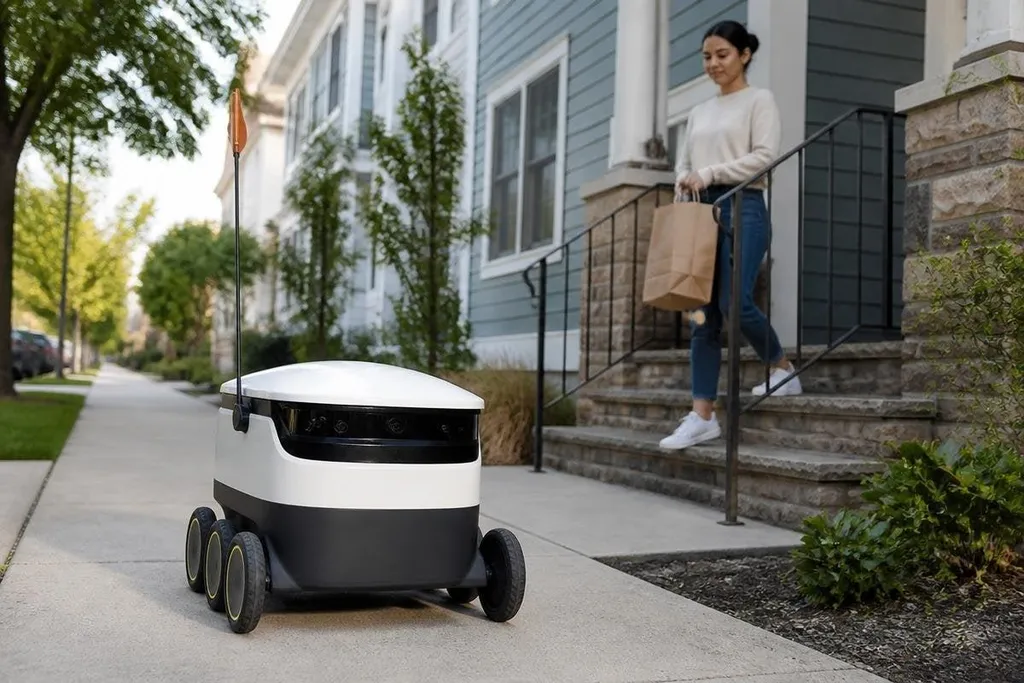
A sidewalk robot moves the last part of a delivery without a driver sitting behind the wheel. That shift could change how local orders leave a store, reach a home, and wait at the curb.
If you manage local delivery, these are the points to watch:
- A robot can handle short trips from a store or local hub to a nearby address.
- Remote staff may need to step in when a crossing, blocked path, or handoff causes trouble.
- The business case depends on access, charging, supervision, and customer handoff rules.
The delivery route gets shorter
Most local delivery work includes a long stretch on public roads before the order reaches a neighborhood. On a shorter route, the robot would carry a small order from a shop, kitchen, or hub to a building entrance.
That changes the work around the vehicle. A van may still bring many orders to a local point, while the robot handles the final streets one trip at a time. The robot's value would come from making those short trips without sending a full vehicle to each address.
The handoff needs a clear plan. The customer might enter a code, use an app, or meet the robot at a set location. If the door is locked or the customer cannot reach the robot, the order needs another path back to the store or a staffed site.
What the robot has to handle
Cameras, other sensors, and software help the robot read its route. It needs to keep space around people, cross driveways, deal with uneven pavement, and stop when its view is blocked.
Those tasks sound small because they happen at walking speed. They still create many points where a delivery can pause.
A parked car can narrow the path. A temporary sign can block a ramp. A busy entrance can leave the robot with nowhere safe to wait.
Remote supervision can help with these cases. A person may review the robot's view, choose a route around an obstacle, or speak with someone near the machine. That person doesn't replace every delivery driver, but they still add a labor cost that belongs in the plan.
That labor line changes the buying question: a delivery manager needs to price remote support alongside the robot. Robot24.com sidewalk robot coverage can tie each trial to its route, test date, operator workload, and local rule before the neighborhood sets the limits.
The neighborhood sets the limits
A robot that works on one route may struggle on another. Sidewalk width, curb cuts, road crossings, weather, lighting, and local access rules can change the result from one block to the next.
The route also affects battery work. A robot that spends time waiting, turning, or taking a longer path uses more power than one moving along a clear sidewalk. Staff need a charging plan, a safe place to park the robot, and a way to recover it when it stops away from the depot.
Public acceptance matters as well. People may move around the robot, touch it, or block its path. The operator needs a clear response for each case, along with a way to report damage, theft, or a missed delivery.
I’d treat a sidewalk robot as a local route tool, not a replacement for the full delivery network.
What to check before a local pilot
A small test should answer practical questions before a larger rollout. Use this checklist:
- Map the route: record sidewalk width, crossings, ramps, gates, and delivery points.
- Set the handoff: decide where the robot waits and how the customer opens the cargo bay.
- Count exceptions: log blocked paths, failed access, customer delays, and remote interventions.
- Price supervision: include staff time for monitoring, calls, recovery, and routine checks.
- Plan charging: name the depot, charging time, storage area, and recovery process.
- Check local rules: confirm permission for sidewalk travel, parking, crossings, and camera use.
The pilot should measure completed deliveries and the work needed to make them happen. A route that finishes orders but needs constant remote help may cost more than a van or a human courier.
Sidewalk robots make the most sense where orders start near customers, paths stay usable, and handoffs follow the same pattern each time. The useful question for a neighborhood operator is whether one route can run with few interventions, then keep that result after traffic, weather, and customer behavior enter the picture.